NEWS
Check frequently for news from Calm Animal Care, community events, and health updates that can impact the health and well being of your pet!
The Covid pandemic showed everyone just how important their pets are in their lives. Veterinarians all over the world were faced with the same situation: Our clients and patients needed us more than ever, and at the same time we had to protect our staff as well as our clients from transmission of the virus. The instructions were clear, in March of 2020: Veterinary clinics are essential, so you must stay open. Go to curbside and drop off service, keep your staff masked, and treat only emergencies. Well, it turns out that when it comes to pets, every situation is an emergency! They are our babies, and when they need care, they need it now. So we did the best we could, running between the clinic and your cars, sometimes using our “outdoor exam room” in the back yard, texting before, during and after exams. Thank you, to all of our understanding and patient clients. We know it’s not easy not coming inside with your pets, and appreciate your trust. We are getting better all the time at communicating with each other.
This pandemic isn’t going to last forever. Vaccines are here, and within months, will be available to all. We will continue to do the best we can, caring for your pets with the highest quality medicine and technology we have available, and the compassion and attention to detail you have come to expect. We’ll continue following the guidelines that keep us, and you, as safe as possible, and get back to normal as soon as we can.
Thank you, so much, for your support in trying times. Thank you entrusting your loved ones to our care.
We’ve been getting some calls about dog flu.
The first outbreak of canine influenza in the US was at a Greyhound track in Florida in January 2004. Racing types being the travelers they are, it spread to other states and showed up in boarding kennels and shelters in several states the first year. These outbreaks were of the H3N8 Influenza A virus. This is very closely related to equine influenza virus and is thought to have mutated from it to a form that affects only dogs. There have been sporadic infections since that time. Then in April 2015 there was a big outbreak of canine influenza in Chicago, involving some 1,000 dogs. It was caused by a different strain — this one mutated from avian influenza and was first identified in dogs in Korea in 2007. It was Influenza A strain H3N2.
Both H3N8 and H3N2 strains of dog flu can cause two forms of disease. By far the most common is the mild form, with a cough, runny nose and a fever– essentially the same symptoms of kennel cough. The cough lingers, and can persist for a month. Then there is the severe form, with a high fever of 104 to 106 degrees F and signs of pneumonia. This is the form that can be life-threatening, but it’s rare. In the Chicago outbreak, it is reported that of approximately 1,000 infected dogs, 0.5% died from complications of the disease. Several thousand dogs across the US have been tested and confirmed positive for H3N2 influenza since then, in clusters of outbreaks that typically resolve in a few weeks or months. It is characterized as a high morbidity / low mortality infection, meaning that it infects many in a cluster but is fatal to few. The virus has not been shown to infect humans, but it can be transmitted to cats. I haven’t found anything about the disease in cats beyond the fact that it’s possible.
Last week, a veterinarian in Helena tested a dog with a respiratory infection and it came back positive for the canine influenza virus H3N2. What does this mean, and how should we respond?
First off — don’t panic. This isn’t an epidemic; it’s one case. The virus is contagious, spread from dog to dog by direct contact and from people or objects touching the respiratory secretions of an infected dog and then not washing before coming in contact with a susceptible dog — just like any other upper respiratory infection. This is why you see us washing our hands all the time between patients. The virus doesn’t last long in the environment and is easily killed with common disinfectants. For folks in Helena, ask your veterinarian — should you avoid boarding kennels and day care for a few weeks, or even the dog park? I think I would be keeping my dogs pretty close to home, or on walks way out in the woods, while we see how this develops.
Then there is the subject of vaccination. Canine influenza virus remains a rare, sporadic disease. It is not endemic like parvovirus or canine distemper virus, which all dogs need to be vaccinated against as puppies and as adults. There is a vaccine for the H3N8 virus, though we have never offered it, as the risk of serious infection is so low. That vaccine would not protect a dog against this new strain, so now there is a new H3N2 vaccine that was just released, on “conditional approval” — meaning that safety and efficacy studies have not been completed. If we had a full – blown epidemic here, you bet I’d consider using the vaccine. But we don’t — and I’m not recommending it.
Bottom line — Avoid sick dogs, stray dogs, and unknown dogs, like you always would to protect your pets. Watch for symptoms — coughing, sneezing, runny nose, fever — and call your veterinarian if your dog is sick. Having a thermometer at home for your pets is always an excellent idea (normal being 99.5 – 102.5 degrees). If your dog gets the flu, the treatment is very similar to when you get the flu: Rest, plenty of fluids, and treatment with antibiotics when needed to control secondary bacterial infection. Remember that most dogs get the mild form. Make sure they’re protected with the core vaccines for the diseases that are prevalent here, and that we still see cases of every few months.
Feel free to call the clinic if you still have questions!
Diabetes mellitus is a serious disease…….it affects just about every system in a mammal’s body. And in dogs, with rare exception, it is preventable. So when we mention that your dog or cat is overweight and really needs to start a diet, we aren’t just nagging. We really are trying to improve your pet’s health and avoid serious consequences, like diabetes.
Today we diagnosed a sweet 11 year old Labrador with diabetes mellitus. If he had gone undiagnosed and untreated for much longer, it likely would have killed him. Fortunately, his family cares about this guy and got him in for an exam as soon as they realized he was losing weight rapidly, drinking more water and was no longer able to make it through the night without having to go outside. They are now committed to a strict feeding and insulin regime, will bring him in for follow up testing, and are willing to adjust their schedules to his for the remainder of his life.
Diabetes is manageable but it isn’t very fun. It is in everyone’s best interest to avoid it, in most cases prevented with a diet that started 2 years ago instead of today.
Beware of Xylitol Poisoning in Dogs
Xylitol is a sugar substitute sweetener found in many products– from gum and candy to peanut butter and baked goods. Even a small amount can be fatally toxic to dogs. Many foods with xylitol are designed for diabetic people or those on low-carbohydrate diets. Xylitol tastes sweet yet is low in calories. In people it has been shown to have multiple health benefits that have made it increasingly popular in natural food stores. It is now available in a granulated form found on bakery aisle shelves at Costco and other stores. What’s not to like? In the human gastrointestinal tract it is absorbed slowly and has little effect on blood sugar. In dogs, on the other hand, it is absorbed into the bloodstream within 30 minutes. The canine pancreas confuses the xylitol with real sugar, and releases a large amount of insulin, which drastically lowers blood sugar levels. This hypoglycemia can be so rapid and severe that the dog dies very soon after ingestion. The other effect of xylitol in dogs is severe damage to the liver. The mechanism for this is not known. This can lead to internal hemorrhage, liver failure, seizures and death. It takes about ten times as much xylitol to damage the liver as it does to cause hypoglycemia.
How much does it take?
The amount of xylitol that it takes to harm a dog is quite small, and depends on the weight of the animal. Dogs who have eaten more than 100 mg of xylitol per kg of body weight should get to a veterinary clinic and be treated aggressively. Those who have ingested between 50 and 100 mg per kg of body weight should still be seen by a veterinarian and monitored for toxic effects. A dog who ingests 1000 mg per kg of body weight is at severe risk for liver necrosis. The amount of xylitol in one piece of sugar-free gum may be anywhere from 0 to 1000 mg, depending on the manufacturer and flavor. That means one stick of gum can potentially cause hypoglycemia in a 20 lb dog. A cup of granulated xylitol used in baking has 190 grams, or 190,000 mg. That calculates out to 11,875 mg per tablespoon– twice as much as it would take to cause life-threatening hypoglycemia in a 130 lb dog, and plenty to cause death by liver failure in a 25 lb dog.
How do we know? How do we make them better?
There is not currently a test for xylitol poisoning. The diagnosis is made by the history of ingestion of a product containing it, and by symptoms of vomiting, lethargy, weakness, diarrhea, collapse, seizures, and death. If the ingestion of xylitol was in gum, symptoms of hypoglycemia may not show up until several hours later. Liver failure may develop in any dog that has ingested xylitol, whether it shows signs of hypoglycemia or not.
The prognosis for dogs who have ingested xylitol depends on how much they ate and how quickly treatment is started. There is no antidote — only timely and intensive supportive care. If treatment for hypoglycemia is started early, the prognosis is good. For dogs that develop liver failure and seizures, or other neurologic symptoms, the prognosis is very poor.
The best treatment is prevention. Read labels and avoid having xylitol containing products anywhere dogs can reach them. A little dog sneaking gum out of the owner’s purse is a common scenario of poisoning. Another, more recent, problem is that now manufacturers have started to sweeten peanut butter with xylitol. Baking with xylitol is obviously dangerous for households with dogs. If there is accidental ingestion, get help as soon as you possibly can.
There have been no known poisonings of cats with xylitol.

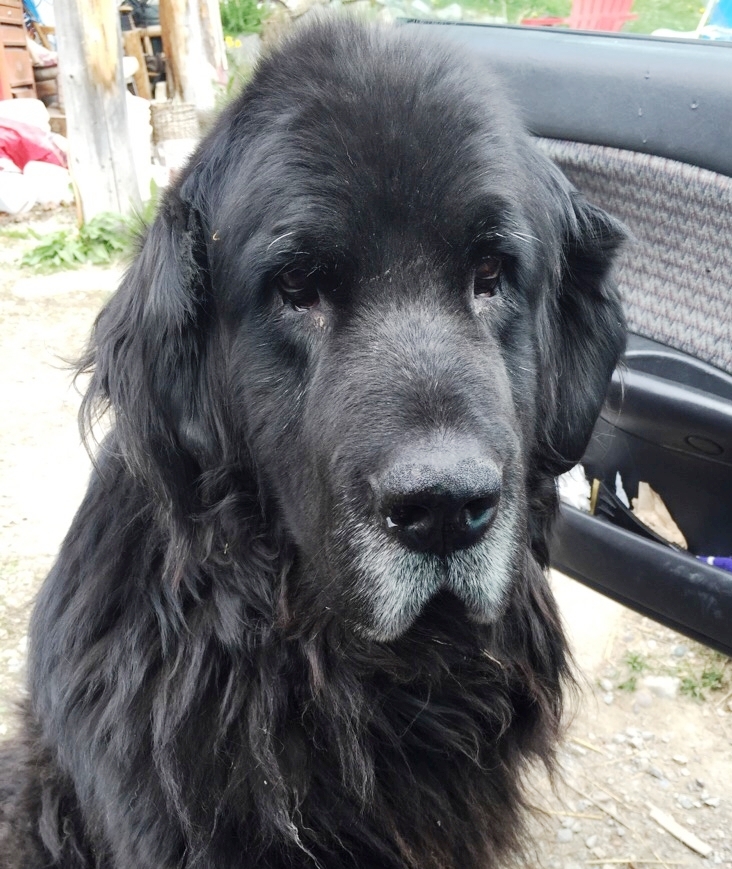
Rosa, a beautiful 8 year old Newfoundland, and her buddy Dan, a 12 year old Labrador, were both victims of unintentional poisoning by xylitol they found when raiding the pantry shelf. This post was made in their memory.
Linda Gragg came to work with us in 2004. Her kind and calm manner would have cats melting in her arms and dogs forgetting that they were ever nervous in the first place. Her steady hands were invaluable in doing procedures and drawing samples, and she contributed greatly to the safety of our patients and staff. Linda was Kalispell native, with a loving husband, three grown children and six grandchildren. She was a great animal lover, filling her home with frisky, enthusiastic bulldogs and cats that owned the place. She found time for fly fishing, camping and creating beautiful hand-made greeting cards.
Linda was diagnosed with cancer in 2013, and took it on with gusto. She made use of every treatment offered, never wavering in her resolve to beat the disease, despite the discomfort that came with many of those therapies. Even in the last weeks of her life she held out hope of coming back to work someday, work that she loved and did with the grace of someone who has found their true calling. She left us on July 27, 2015, and we will miss her, always.  Linda’s family has requested that contributions be made in her memory to the Calm Animal Care donation fund. This account is a source of help for low income pet owners who could not otherwise afford to treat unexpected injuries and illnesses in their furry family members. Anyone desiring to donate to this fund can do so by calling the clinic or by mailing a check with “Linda Gragg Memorial” in the memo line to PO Box 14, Kila, 59920. To donate on – line, here’s a Paypal link